


 New Patient Form
 Request an Appointment
Dentures in Orleans
Losing teeth changes more than your smile; it changes how you chew, how you speak, and over time, the shape of your jaw. At Trillium Dental on Mer Bleue Road, denture fittings, adjustments, and ongoing care all happen in-house. Your denture is built around your mouth specifically, and the same team that fitted it is there when it needs adjusting-no referral to a separate denture clinic, no explaining your case to someone new.
Get in touch with us
Do not fill this form out if you’re a solicitor.
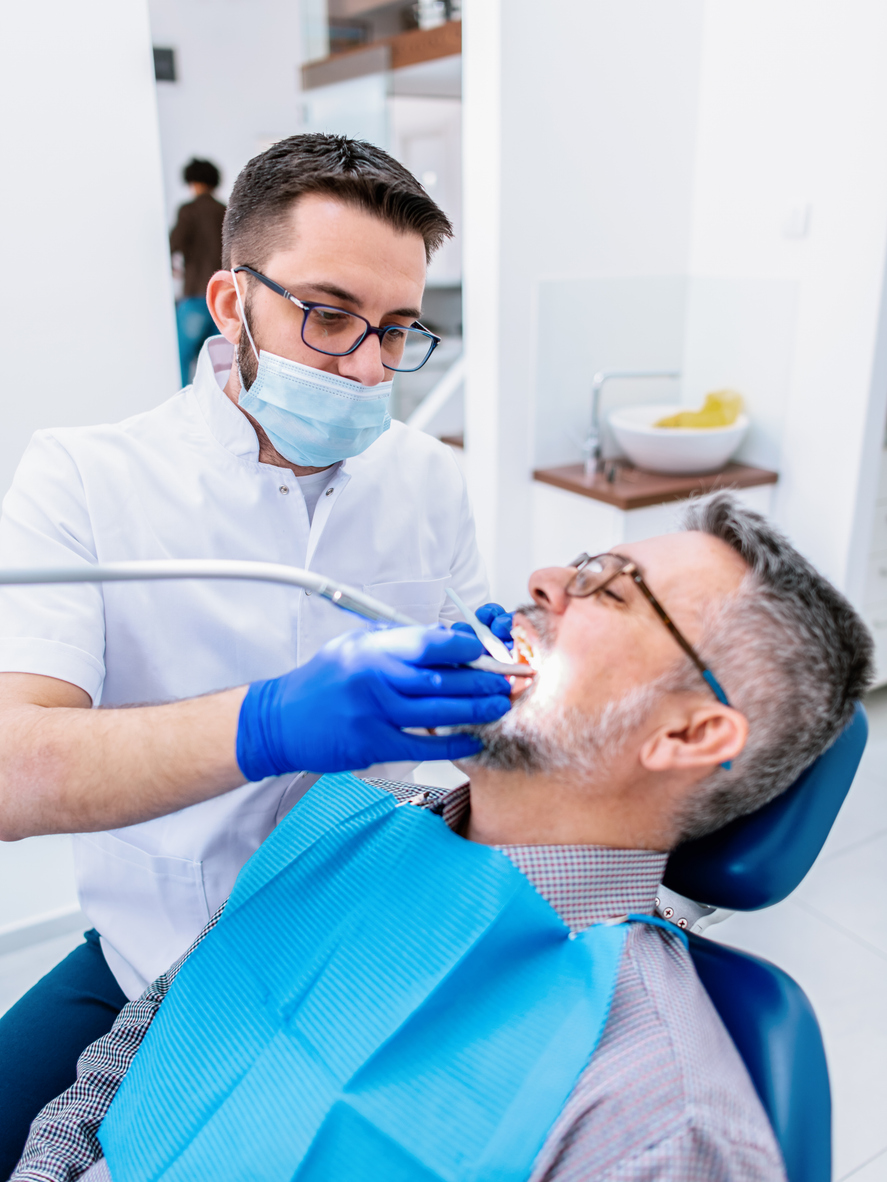
Why Missing Teeth Affect More Than Your Appearance
A tooth does two things simultaneously: it lets you chew and speak clearly, and it stimulates the jawbone beneath it. When a tooth is gone, the bone underneath begins to shrink, a process called resorption. It happens slowly and without pain, which is why many patients don’t notice it until a denture that once fit well starts shifting, or until the contour of their face changes in ways they weren’t expecting.
Traditional full and partial dentures sit on top of the gum. They restore your bite and your appearance, but they don’t stop bone resorption underneath. Implant-supported dentures do because the implants function as tooth roots and continue to stimulate the bone the way natural teeth would. For patients who’ll be wearing a denture long term, that distinction often matters more than they realize at the start.
Knowing this upfront is part of choosing the right option from the beginning, rather than discovering the issue several years later.
Types of Dentures at Our Orleans Clinic
The right denture type depends on how many teeth are missing, the health of your remaining teeth and gums, your bone density, and how much stability you need. Here is what is available at our Orleans dental centre:
Full Dentures – Complete Arch Replacement
A full denture replaces an entire arch, upper, lower, or both. It rests on the gum and is held in place by suction and the natural contours of your jaw. Eating and speaking generally feel natural after an adjustment period. Because your jaw changes shape over time, the fit should be monitored at regular checkups and may need a reline before the full denture needs replacing.


Partial Dentures – Filling Gaps Around Healthy Teeth
A partial denture fills in missing teeth while working around the healthy ones you still have. Prosthetic teeth are set on a gum-coloured base with small clasps that anchor to your existing teeth. A well-fitted partial blends naturally with your smile and prevents remaining teeth from drifting into the empty spaces over time.
Implant-Supported Dentures – Stable, Bone-Preserving
An implant-supported denture is anchored to implants placed in the jaw. It removes the shifting and movement of a conventional denture; you eat and speak without the denture moving, and the implants prevent the bone loss that happens underneath a traditional denture over time. For patients already living with a loose or ill-fitting denture, this is often the most meaningful upgrade available. Implant surgery at our Orléans location is performed in-house by Dr. Fokam, our on-site periodontist and implant surgeon — no referral to another clinic required.


Snap-On Dentures – Secure During the Day, Removable for Cleaning
Snap-on dentures click onto implants with small connectors, holding them firmly in place all day. You still remove it for cleaning. Patients who switch from a conventional denture to a snap-on denture typically notice improved stability and comfort right away.
Same-Day Dentures – Teeth on the Day of Extraction
A same-day denture is placed immediately after tooth extraction, so you leave with a full set of teeth that day. As your mouth heals, the fit changes; a reline is usually needed once the gums have fully settled. Same-day dentures are a practical option when avoiding any gap period matters to you.

Caring for Your Dentures
Good daily habits protect both your denture and your gum health over time.
- Rinse after every meal and brush daily with a soft denture brush and a non-abrasive cleaner; regular toothpaste is too abrasive and will scratch the surface
- Soak overnight in a denture-safe solution to prevent drying and bacterial buildup
- Avoid hot water, which can permanently warp the shape
- Handle your denture over a folded towel or a water-filled basin; dentures fracture easily on hard surfaces
With proper care, a denture typically lasts five to ten years. Your jaw shape changes naturally over time, so regular checkups catch early signs of shifting fit before they affect how the denture functions. A reline, adjusting the base to match your changed jaw, is often all that’s needed before a full replacement becomes necessary.
What Your First Visit Looks Like
Your first denture consultation is mostly assessment and planning, not treatment. We look at your remaining teeth, your gum health, and the shape and density of your jaw before any option is recommended. Then we take a precise mold of your mouth; that mold is what the entire denture gets built from.
One thing worth knowing going in: even a well-made denture takes time to feel right. Most patients need a few adjustment visits before the fit and function settle in. That’s completely normal; it’s not a sign that something went wrong. Having your fitting and your adjustments managed by the same team at one location makes that process straightforward. You don’t have to retell your history, coordinate between two offices, or wait for notes to transfer.
We’ve seen patients come in frustrated after years of managing with a denture that didn’t quite fit sometimes a denture fitted elsewhere, sometimes one that fit well initially but shifted as their jaw changed. Those cases are some of the most rewarding to work through, because the difference a properly fitted denture makes in how someone eats, speaks, and feels about their smile is significant.
Frequently Asked Questions
Thinking about dentures in Orléans? Here are answers to the questions we hear most often.
Most of the time, it’s jawbone resorption. When teeth are missing, the bone underneath gradually loses density, and as the jaw changes shape, a denture that once fit well starts to move. This is a normal process, but it’s not something you have to just live with. A reline can restore the fit in many cases. For patients where bone loss has become significant, implant-supported dentures address both the stability problem and the ongoing resorption underneath. Come in, and we’ll assess where things are.
A conventional denture rests on the gum and relies on suction or clasps for stability; it can shift when you eat or speak, and bone loss continues underneath it. An implant-supported denture is anchored to implants in the jawbone: no shifting, significantly better chewing function, and the implants stop the bone from continuing to shrink. The upfront cost and treatment timeline are longer, but for patients who are looking at decades of wearing a denture, the long-term difference in fit, function, and jaw preservation is significant.
OHIP doesn’t cover dentures for most patients. Limited coverage is available through programs like Healthy Smiles Ontario for eligible low-income adults. Some private dental insurance plans cover a portion of denture costs, typically the prosthetic, less commonly the implant component. Bring your coverage details to your consultation, and we’ll clarify what applies before anything starts.
Yes, with time. Most patients find that eating and speaking feel natural after the adjustment period, usually a few weeks. Hard or very chewy foods may take more care initially. Implant-supported dentures restore chewing function closer to natural teeth because the denture doesn’t move during use.
From impressions to the finished denture, it typically takes a few weeks. Same-day dentures are placed immediately after extraction, but they require a reline once your gums have healed; the timeline extends slightly for that step. Your consultation will give you a clear schedule based on your specific treatment plan.
Yes. A partial denture is designed to work around your existing healthy teeth, not replace them. The clasps anchor to those teeth without permanently altering them, and the partial fills the gaps while keeping your remaining teeth from drifting. If the healthy teeth are ever lost later, the partial can be adjusted or replaced.
Longer gaps mean more bone loss has likely occurred underneath, which factors into the type and fit of the denture. But years without treatment don’t disqualify you; it just means a thorough assessment matters more. We’ll look at the current state of your jaw and give you a clear picture of what’s realistic, including whether an implant-supported option would serve you better than a conventional one.
Come with a clear sense of what’s been bothering you, whether it’s missing teeth, an existing denture that no longer fits, difficulty eating, or some combination. If you have X-rays or records from another provider, those are helpful. Bring your insurance information if you have it. Most importantly, bring your questions — the consultation is where we go through everything before any treatment is agreed to.
Stories of Comfort, Care, and Trust Restored
I want to thank Trillium Dental has guided me with my great orthodontic journey from my braces till getting my retainers with the help of they ultra modern techniques and...

I had my teeth scaling done here. The doctor and staff were very nice. The entire procedure was painless and went very smoothly. I would recommend this clinic to anyone."...

We are very happy with the excellent dental treatment given to me and my family since last 2 decades. I personally have undergone fixed teeth with implants. The Doctors at...

My experience at Trillium Dental Clinic for correction of underbite without any surgery, Deep cleaning, cavity filling and polishing was excellent .The entire process was not completely painless for me...

I have been visiting Trilium Dental Clinic for the past 20 years, and it has always been a wonderful experience. Dr. Thomas Koshy, who was once my student, has grown...

Book Your Denture Consultation in Orleans Today
Missing teeth or an ill-fitting denture affects more than your smile, they affect how you eat, how you speak, and the structure of your jaw over time. The consultation is where you find out exactly what’s possible for your case. We assess your jaw health, walk you through the options, and give you a clear timeline and cost breakdown before anything begins.